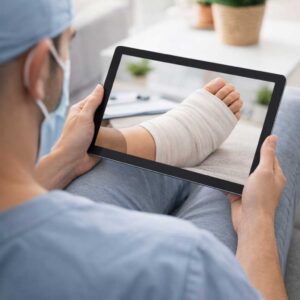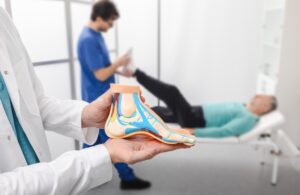
Foot and ankle problems rarely announce themselves all at once. They tend to creep in—subtle discomfort, changes in activity, small adjustments made to avoid pain. Over time, those adjustments begin to shape daily life. Effective podiatric care should minimize friction, not add to it. Telemedicine has become one of the most practical ways to do that.
Virtual podiatry visits are not designed to replace traditional care. They exist to offer timely access to experienced clinical judgment, especially when an in-person visit may not be immediately necessary or practical. When used appropriately, telemedicine allows many foot and ankle concerns to be evaluated carefully, safely, and with purpose.
What Is Telemedicine in Podiatry?
Telemedicine in podiatry refers to the use of secure video visits, digital photographs, and detailed medical histories to evaluate foot and ankle concerns remotely. It allows a podiatrist to observe movement, review visible changes, discuss symptoms in depth, and apply clinical judgment to determine appropriate next steps.
In practice, telemedicine is less about technology and more about decision-making. The goal is to understand what is happening, identify anything that requires urgent or hands-on attention, and decide whether a condition can be managed conservatively, monitored over time, or evaluated further in person.
When used responsibly, telemedicine supports the same core principles as in-office care: careful listening, thoughtful assessment, and clear guidance. It does not replace physical examination when one is necessary—but it often helps clarify whether and when that examination is truly needed.
 Why Telemedicine Has a Real Role in Foot and Ankle Care
In clinical practice, the question is rarely whether care is needed. More often, the question is when and how that care should begin. Many foot and ankle conditions—such as Achilles tendon pain, ankle injuries, and early forefoot issues—benefit from early evaluation, conversation, and visual assessment before hands-on treatment is required.
Secure video visits, detailed histories, and high-quality photographs often provide enough information to understand symptom patterns, identify red flags, and decide on next steps. This approach respects both patient time and clinical responsibility. It allows care to begin without forcing unnecessary travel, missed work, or physical strain.
For patients living outside Southern California, traveling frequently, residing internationally, or managing mobility challenges, telemedicine often becomes the most reasonable starting point.
When a Virtual Podiatry Visit Makes Sense
Telemedicine consultations are particularly useful for patients who:
- Live far from a podiatry office or have limited local access to specialty care
- Travel often or live abroad
- Have chronic pain or mobility limitations that make travel difficult
- Prefer to avoid unnecessary in-office visits
- Want professional clarity before committing to hands-on care for issues like heel pain or plantar fasciitis
A virtual visit helps answer an important early question: Can this be managed conservatively, or does it require in-person evaluation? That decision is best made deliberately, not by default.
Conditions Commonly Evaluated Through Telemedicine
Many podiatric concerns spanning a wide range of conditions and treatments can be evaluated remotely during early assessment, follow-up, or treatment planning. These commonly include:
- Heel pain and plantar fasciitis
- Ingrown or painful toenails
- Bunions and forefoot discomfort
- Nail fungus and skin conditions
- Tendon and ligament injuries
- Post-operative follow-ups
- Orthotic evaluations and adjustments
- Second opinions and long-term planning
With guided discussion and visual review, patients often receive clear direction and practical guidance without needing to leave home.
The Value of Early, Informed Evaluation
Foot and ankle problems tend to progress when they are ignored or misunderstood. What begins as intermittent discomfort can gradually become persistent pain or functional limitation. Telemedicine allows many patients to seek insight earlier—before symptoms become entrenched.
Early evaluation often leads to conservative care such as footwear adjustments, activity modification, targeted exercises, or orthotic support. Addressing problems at this stage frequently reduces the likelihood of prolonged pain or more invasive treatment later.
When an In-Person Visit Is the Right Call
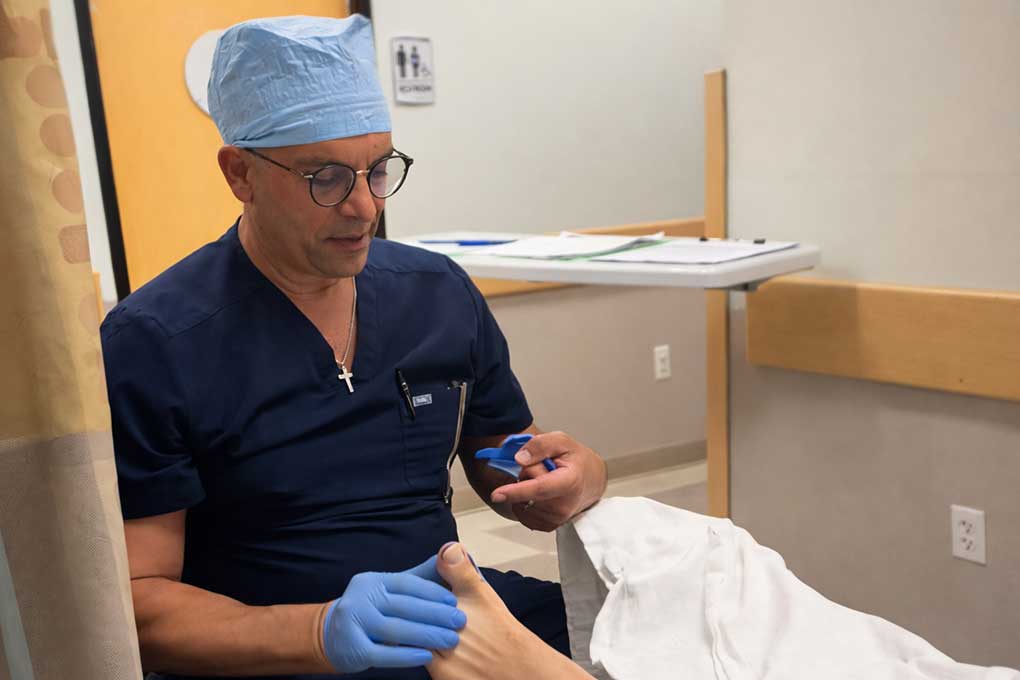 Telemedicine has clear limits, and recognizing those limits is part of responsible care. Certain situations require hands-on examination, imaging, or procedures that cannot be done virtually.
An in-office visit may be recommended when:
- A physical exam is essential for diagnosis
- Imaging such as X-rays or MRI is required
- There are signs of infection, circulation issues, or nerve involvement
- Surgical treatment is being considered
When this happens, telemedicine still plays an important role. A virtual consultation helps determine whether an in-person visit is necessary, what that visit should involve, and how to prepare for it—so care is coordinated, intentional, and never rushed.
For patients who live out of state, travel frequently, or reside outside the area, this approach ensures that any in-person care is purposeful and well-planned, while allowing expert guidance to begin from wherever they are.
Common Questions Patients Ask About Telemedicine Podiatry
Can a podiatrist really evaluate foot pain through telemedicine?
- In many cases, yes. While not every condition can be diagnosed virtually, symptom history, visual assessment, and movement evaluation often provide enough information to determine appropriate next steps.
Does telemedicine replace in-person podiatry visits?
- No. Telemedicine works best as part of a broader care approach. It helps decide when hands-on care is necessary and when it is not.
Is telemedicine appropriate for ongoing or chronic issues?
- Often, yes. Virtual visits are commonly used for follow-ups, monitoring progress, reviewing imaging, adjusting treatment plans, and long-term management.
Telemedicine Within a Comprehensive Care Philosophy
Good podiatric care is never about treating isolated symptoms, but about following a structured, experience-driven treatment approach that addresses contributing factors and long-term outcomes. It requires understanding contributing factors, daily demands, and long-term goals. Telemedicine supports this approach by allowing time for education, discussion, and thoughtful planning.
Virtual visits encourage collaboration and shared decision-making. Patients gain clarity about what may be happening, why certain recommendations are made, and what options exist moving forward.
Care That Fits Real Life
Healthcare should adapt to patients, not the other way around. Busy schedules, distance, physical limitations, and personal responsibilities should not prevent access to experienced guidance.
Telemedicine makes it possible to receive expert podiatric insight whether patients are across town, across the country, or across the world—without lowering clinical standards.
A Deliberate Use of Technology
Telemedicine is not about shortcuts. It is a tool that must be used with judgment. When applied appropriately, it improves access, reduces unnecessary visits, and helps patients make informed decisions about their care.
Combining experience, careful evaluation, and modern technology allows podiatric care to remain personal and grounded—even at a distance.
Start With Virtual Care—Get Clear Answers Sooner
Foot and ankle problems don’t always need an immediate office visit, but they do require experienced medical judgment. Virtual care through telemedicine offers a direct way to get that guidance early—before symptoms progress, decisions are delayed, or unnecessary steps are taken.
Through telemedicine appointments, Dr. Robert J. Joseph helps patients evaluate foot and ankle concerns—from Achilles injuries to chronic ankle pain—determine whether conservative care is appropriate, and decide when in-person treatment is truly needed. This virtual-first approach removes guesswork, saves time, and ensures that care moves forward with purpose and clarity.
Visit our Telemedicine Page to learn more or schedule a virtual consultation today.